
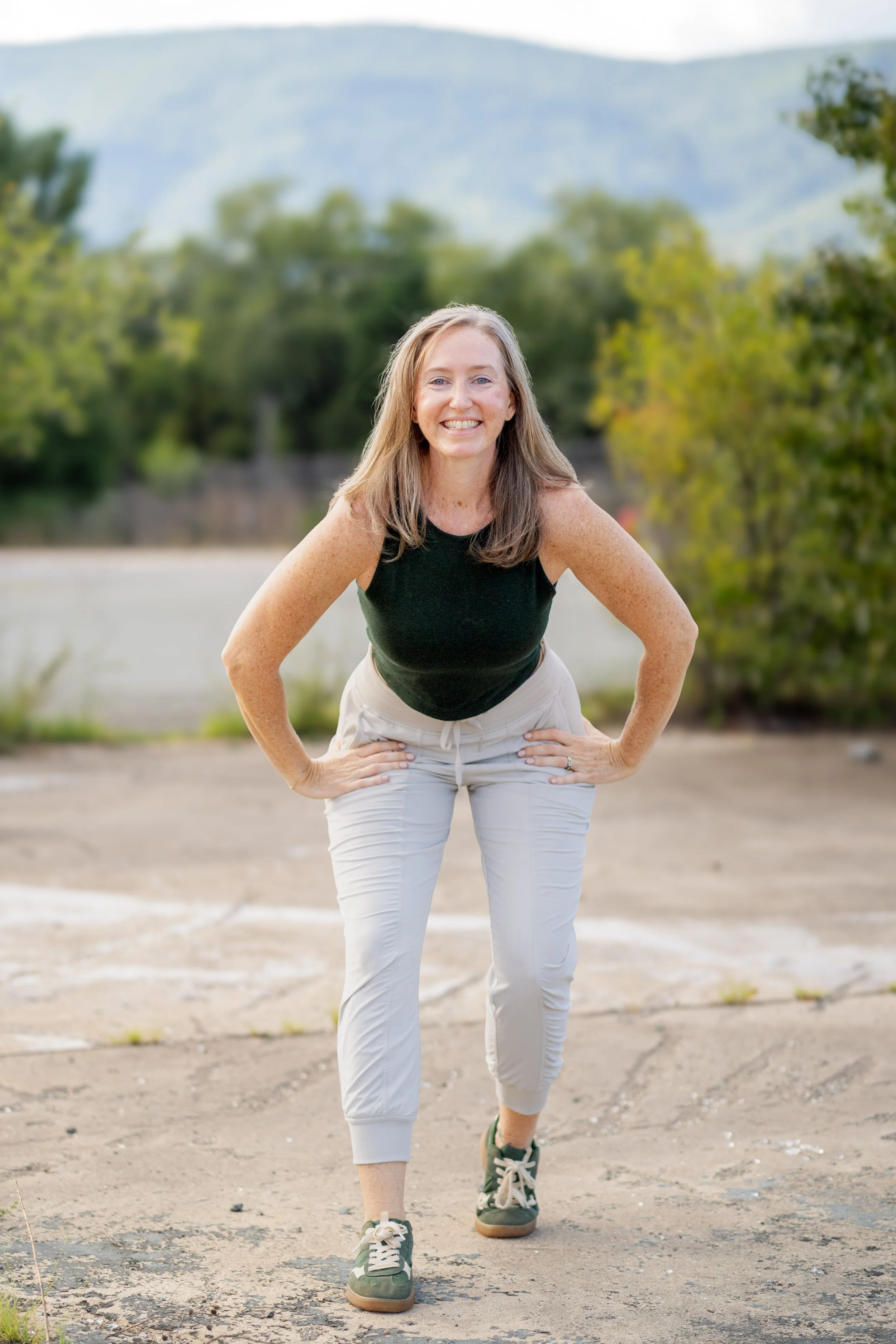
November’s Lift of the Month is the Squat
Common Name(s): squat, parallel squat
Yogic Name(s): Utkatasana, Malasana
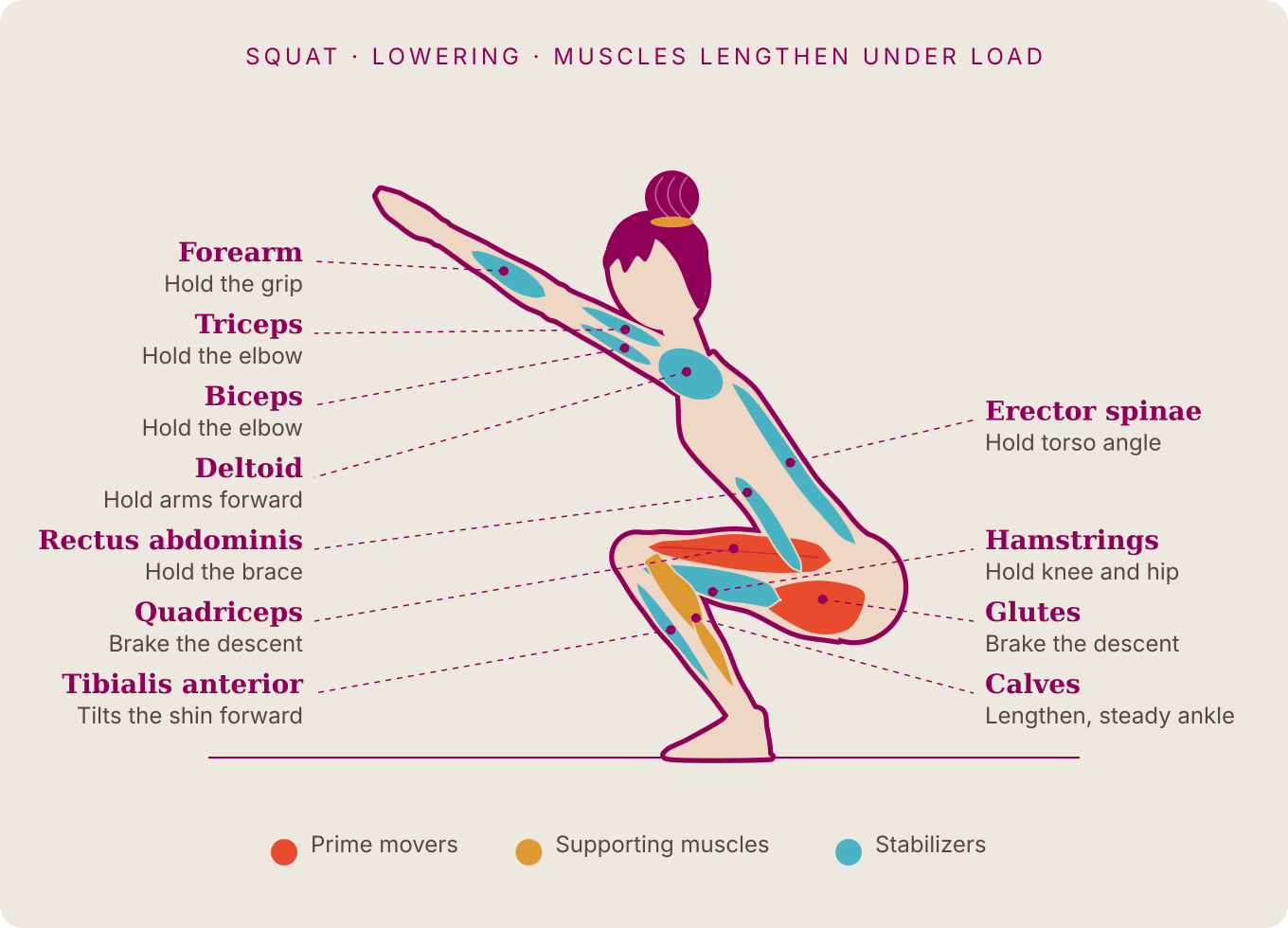
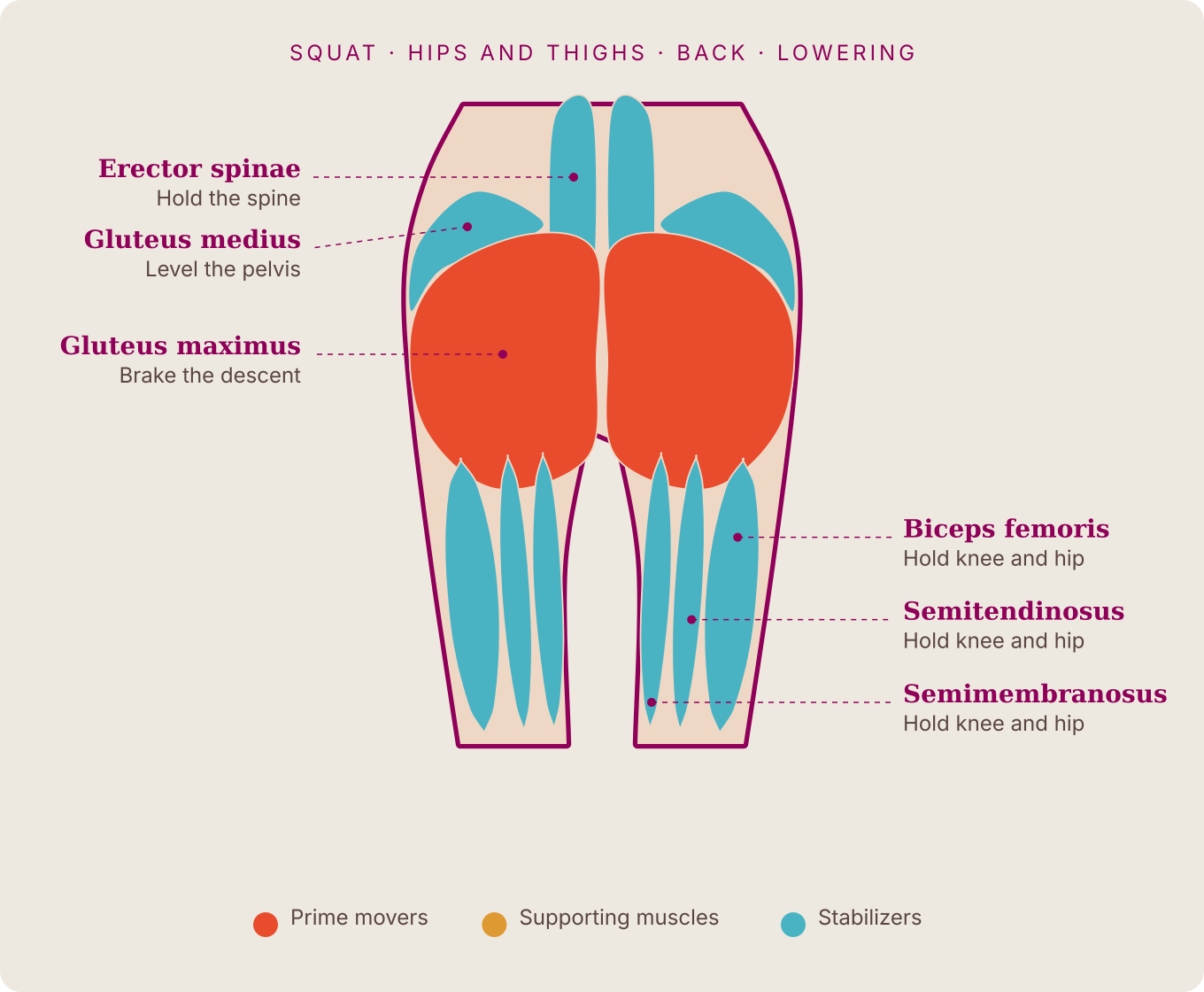
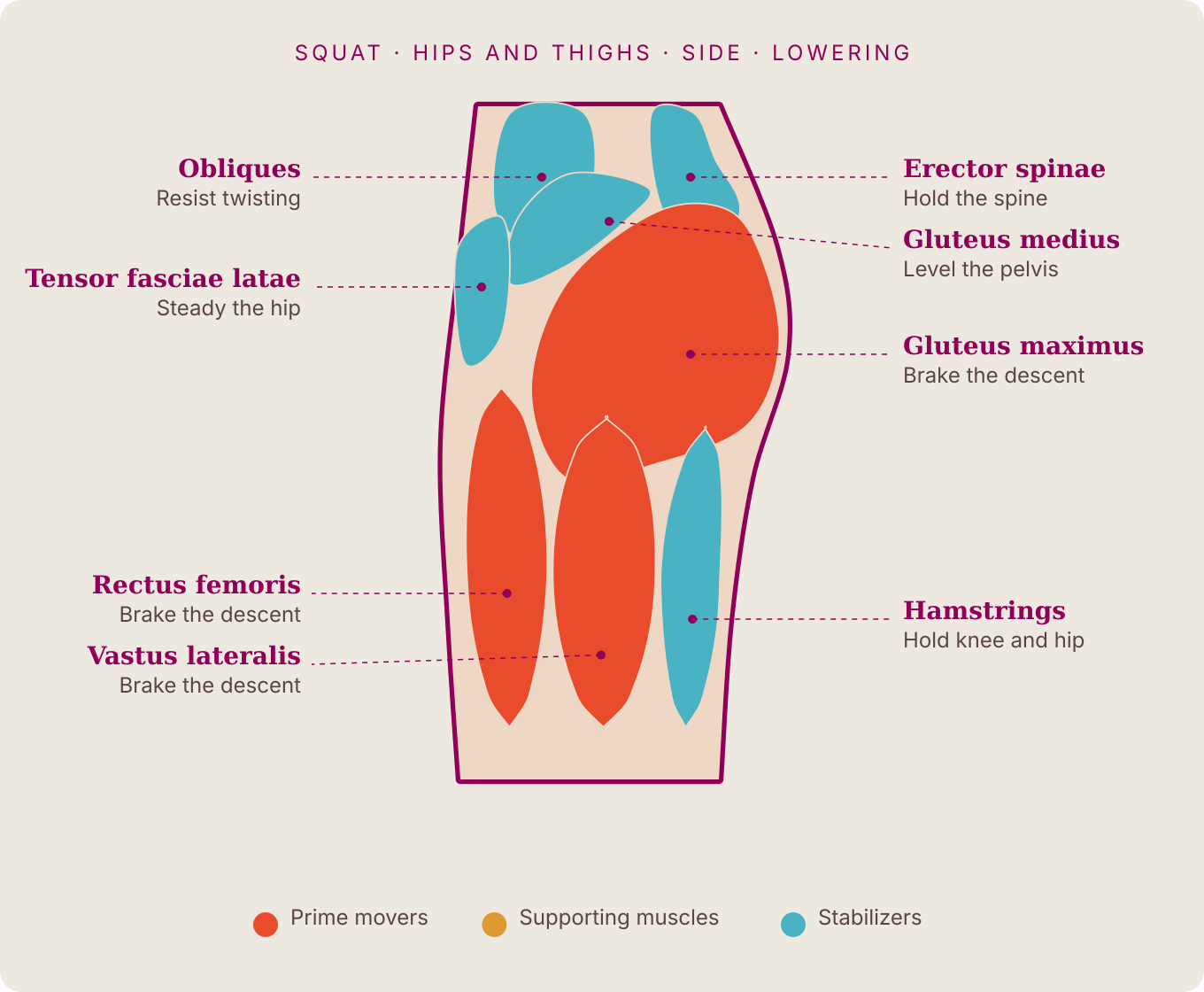
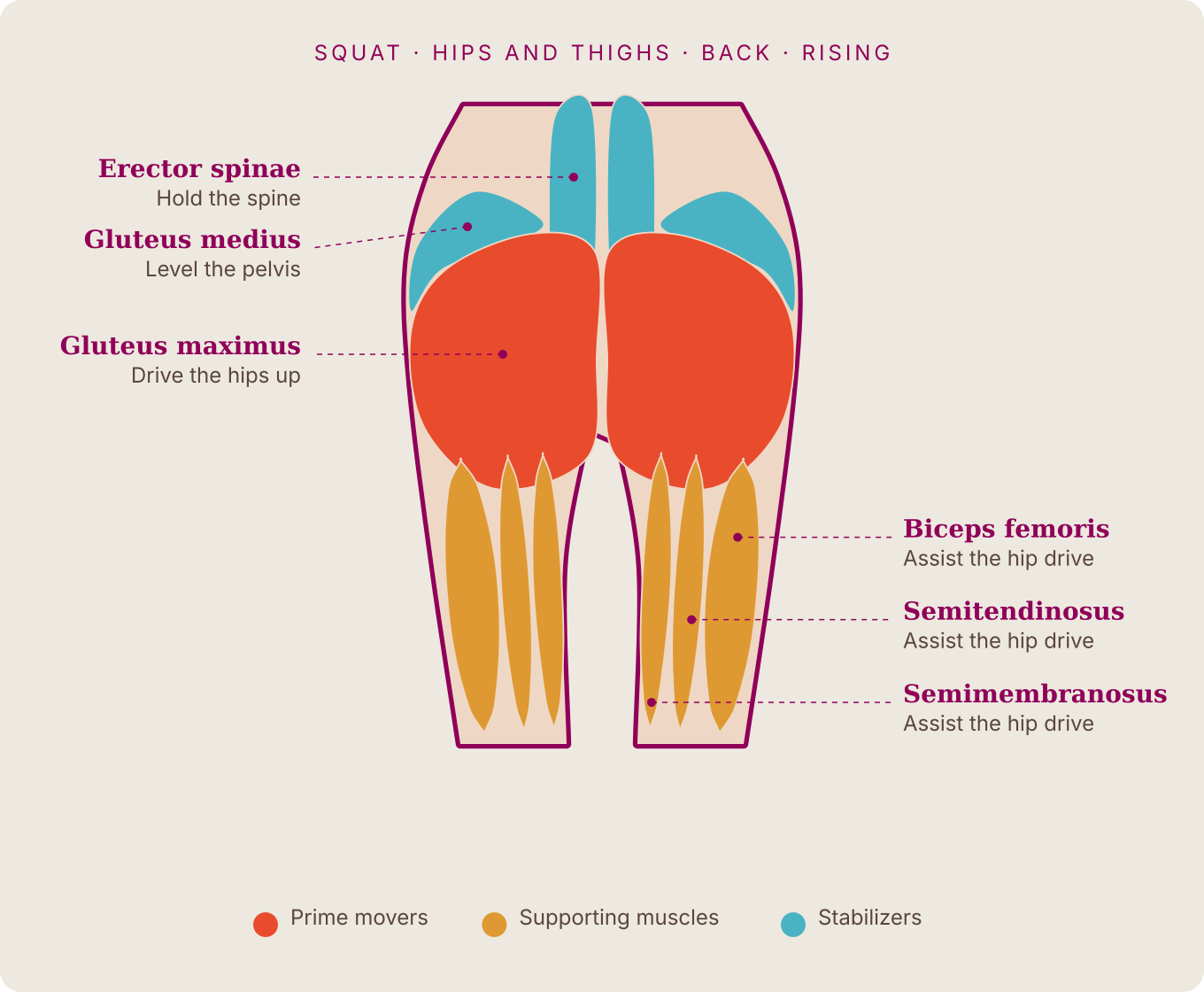
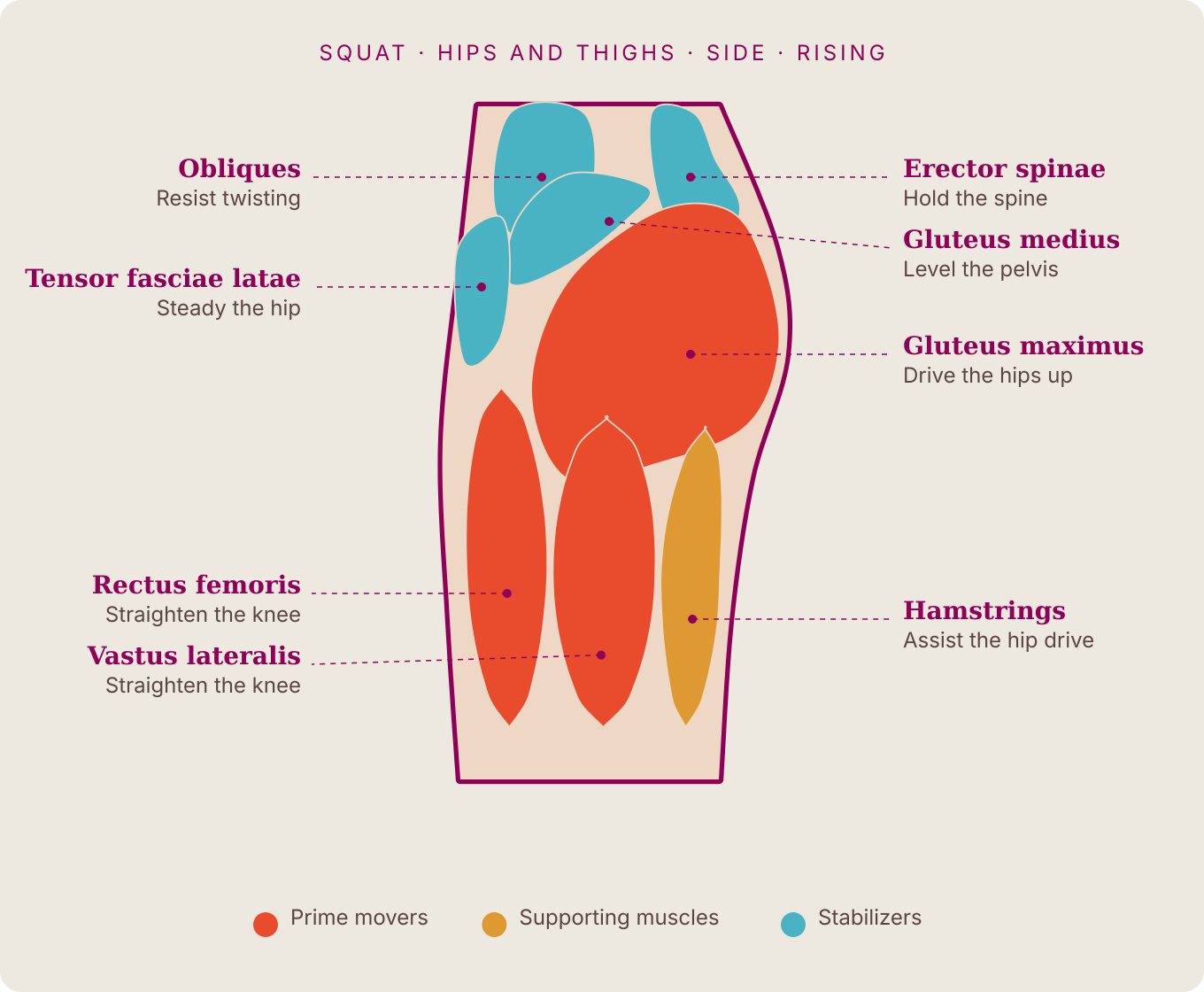
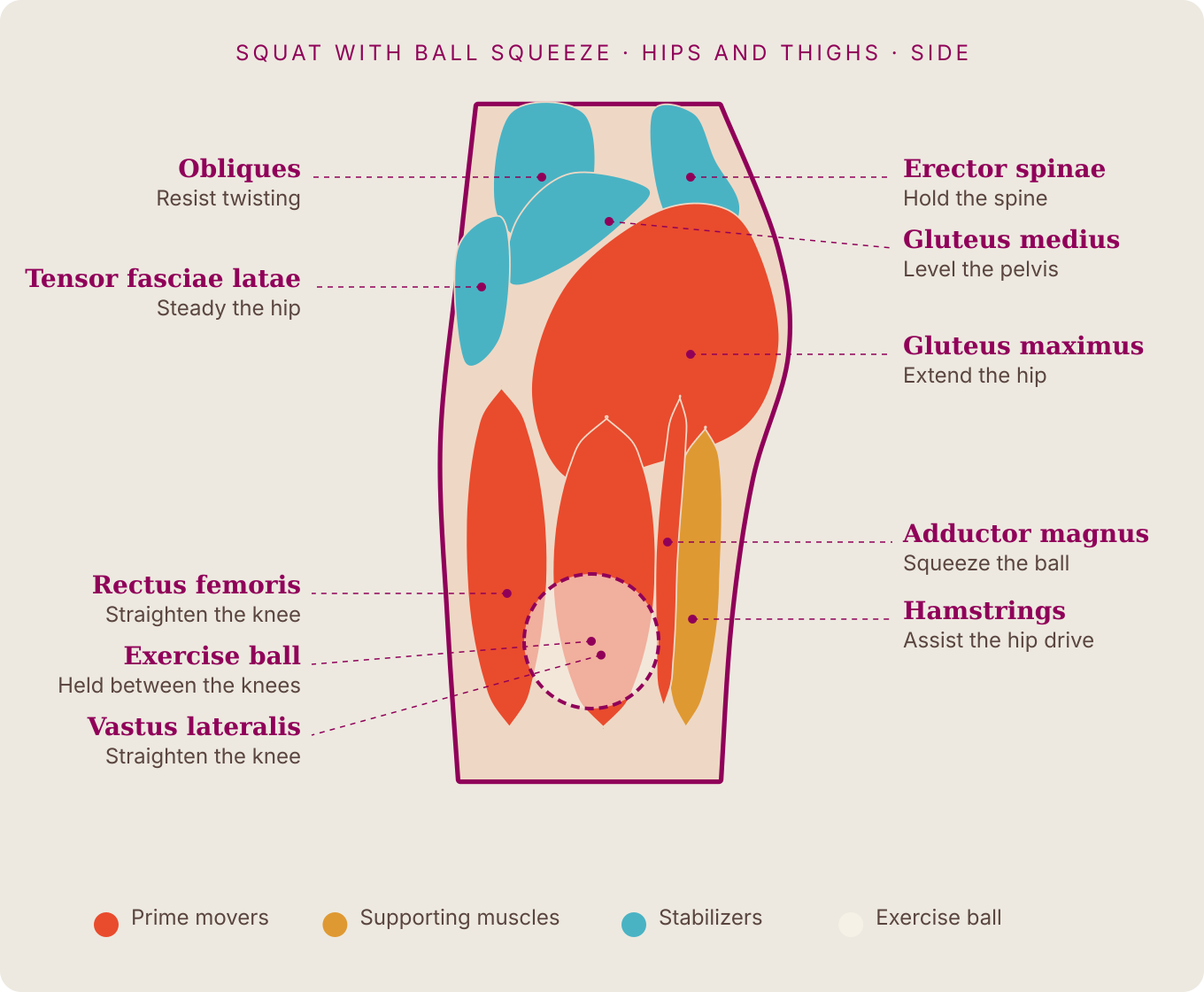
Muscles: Quadriceps, Gluteals (maximus - primary, medius - stabilizer), hamstrings, adductors, calves, suite of abdominals, and erector spinae.
Movement: Hinging pattern in the sagittal plane; Compound movement
Benefits: skeletal muscle strength, bone density support, joint stability, digestive support, cardiovascular health
Why the Squat
How do you get into and out of a chair? Do you use your hands? Do you plop down without really thinking about it? Do you make sounds either vocally or in your joints? Do you favor a side when you sit?
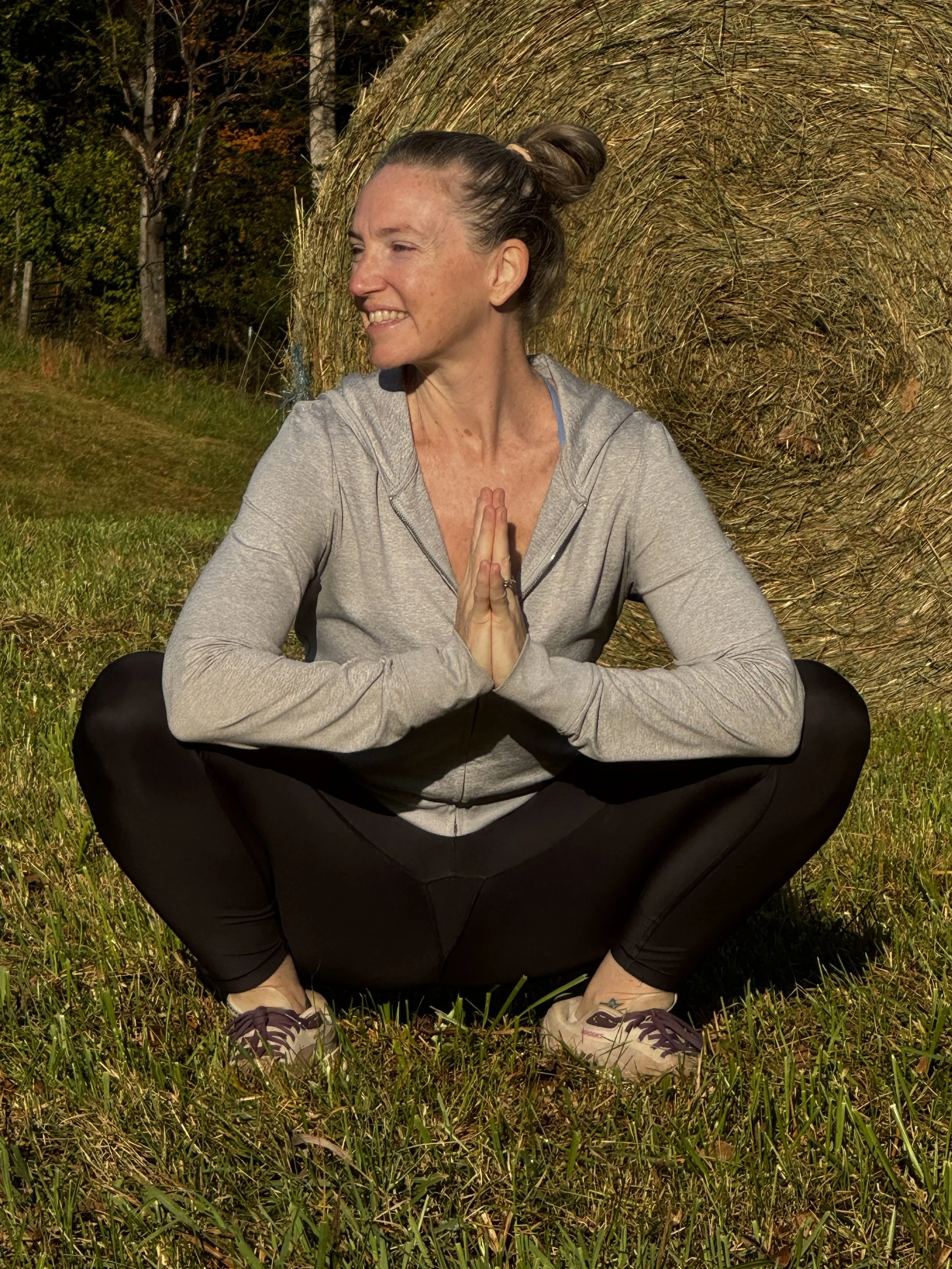
Squats are about as basic as it comes as a daily movement, and also the most complex when it comes to engagement and variety. This is a move you make passively every day, without ever really thinking about the motion. It is one of the Vital Signs in Built to Move (Kelly Starrett and Juliet Starrett) - an indicator of a body that is vital and can move freely. People in all different cultures sit comfortably in a deep squat while they eat, meditate, carry on a conversation, or do their work, among other things. The yogis call this pose Utkatasana (aka. chair pose) or the deeper version that rest or work occurs in is Malasana.
Benefits
The squat is beneficial for many reasons from a muscular and skeletal perspective. But one lesser known benefit is that of digestive support as a result of the compression in the abdominals. Sitting in a squat can also help with elimination and has been known to be a position for childbirth (I, personally, used the squat during labor). That compression is a great go-to when you’re feeling heavy in the gut or having trouble with constipation.
On an energetic level, the movement of a squat is energizing and moves energy up and in (think base of the spine to the heart and head). When breathing in a squat movement, the inhale occurs as you sit down and exhale as you lift back up. In an air squat (no weight), arms are generally lifted with arms along the ears or palms are pressed together at the heart. When you think about this from a pelvic floor stance, as we women will want to do if childbirth is in your history, the typical guidance will be to relax pelvic floor on the lowering and engage pelvic floor on the exhale. This in turn engages the core, which is a set of stabilizers for this move. (Note: consult with a pelvic floor therapist for the correct guidance for your body if you do have any pelvic floor concerns - leakage, tightness, prolapse, etc.)
For the skeleton, the squat enabled every major hinging joint in the lower body - the hips, the knees, and the ankles. When the muscles around the joints are exercised and strengthened, the bones are also strengthened by putting the skeleton under stress. Now, this is important especially for women preparing for, in peri-, or in post- menopause because of the risk of osteoporosis and osteopenia. The earlier we start resistance training in life, the lower the risk of your bones losing density (note that this is in addition to other behaviors to protect the bones that we will cover in future posts). The squat is also asking the joints to stabilize as you lower. So, the combined time under tension and stabilizing effects on the joints increases the longevity and strength of the skeleton.
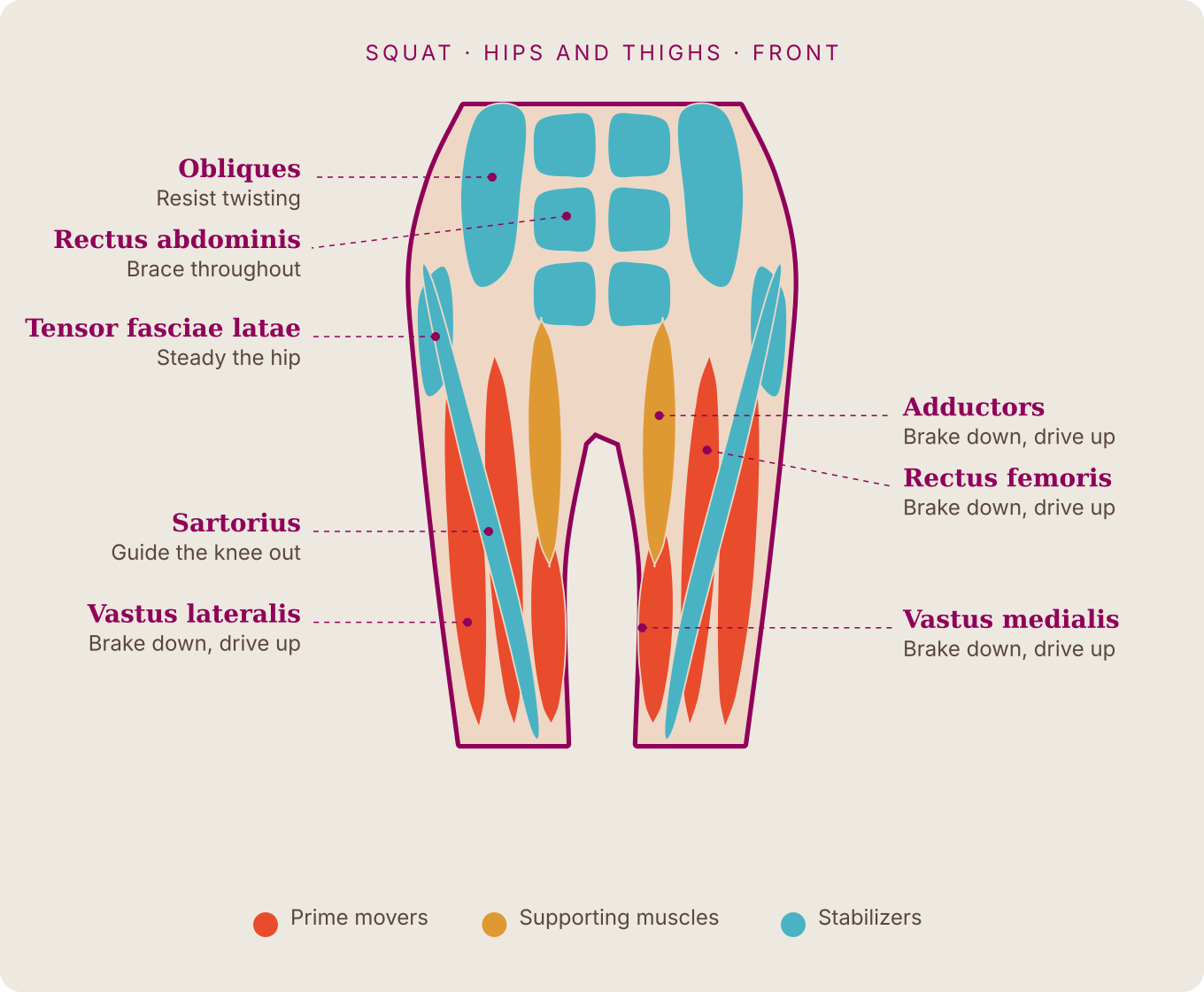
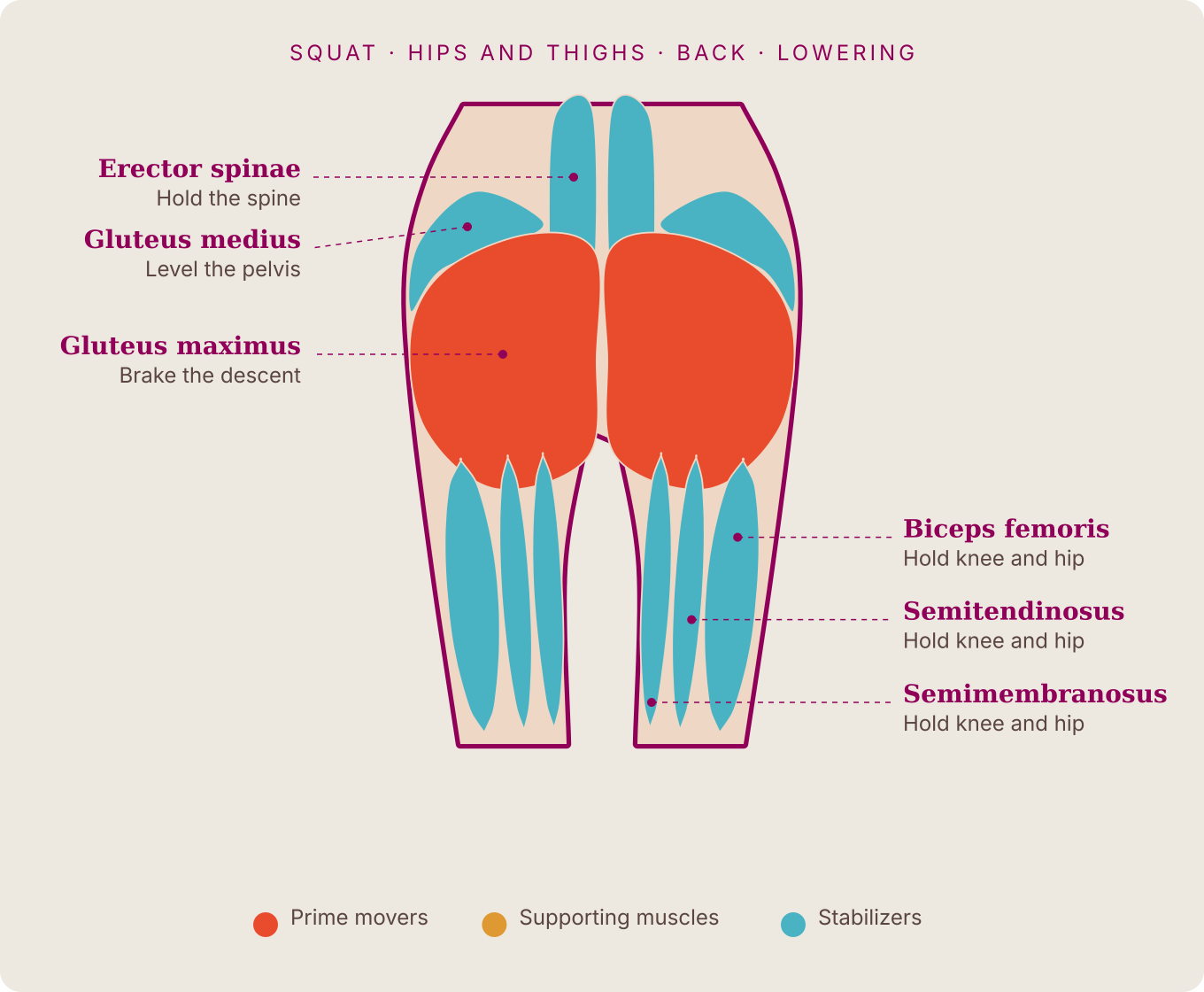
In simple terms, the squat is a full body exercise that will engage muscles in the front, back, top, and bottom of the body. And when done properly, it’s going to also engage the mind and the breath. It strengthens the bones, encourages movement in the digestive system, and improves cardiovascular health from the engagement of all of these other systems. It’s the move that brings stability, rhythm, and harmony to a functional body. Pretty amazing, huh? Who knew?! Squats for the win!
Common Discussion Points
Some debates in the squat world include toes out or forward, heels lifted or not, lean forward or straighten up? And, my honest opinion, is that it all depends on the person’s goals, level of conditioning, and their body proportions. So, here’s my usual disclaimer when I talk to clients about their squat stance: we are practicing a squat that is going to work the muscles in proportion. As certified personal trainers (CPT’s), when we do a squat assessment, we are looking for over-compensating muscles that identify the weaker muscles and/or whole sides of the body. When we place the toes forward, this encourages the muscle engagement to be proportional and not allow the over-compensating muscles to take over, thereby strengthening the weaker muscles. We would also want to strengthen the weaker muscles with specific, targeted exercises as well when programming workouts for these individuals. The squat assessment will evaluate upper body, core, and lower body. Again, this is a simple exercise that can tell a full body story.
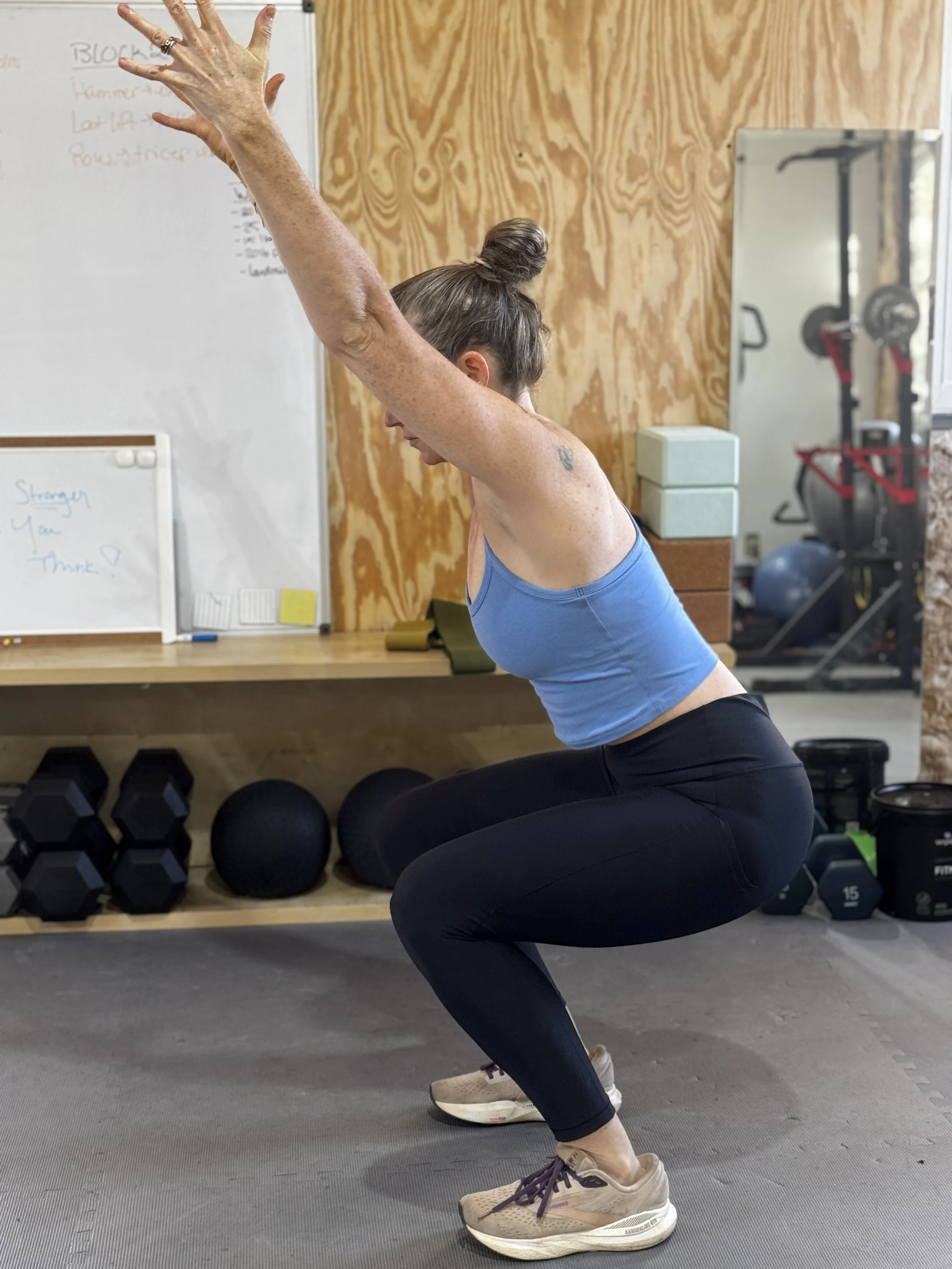
Ideally, a squat will descend low enough to get the femurs parallel to the floor, the back is straight line from sacrum through shoulders, crown of the head and finally fingers. The hips are lower than the heart. The foot is equally engaged from big toe to pinky toe to heel. Knees will go over the toes. Think of yourself like a lightning bolt pulling energy from the earth up the body in the zigzag shape and out through the fingers!
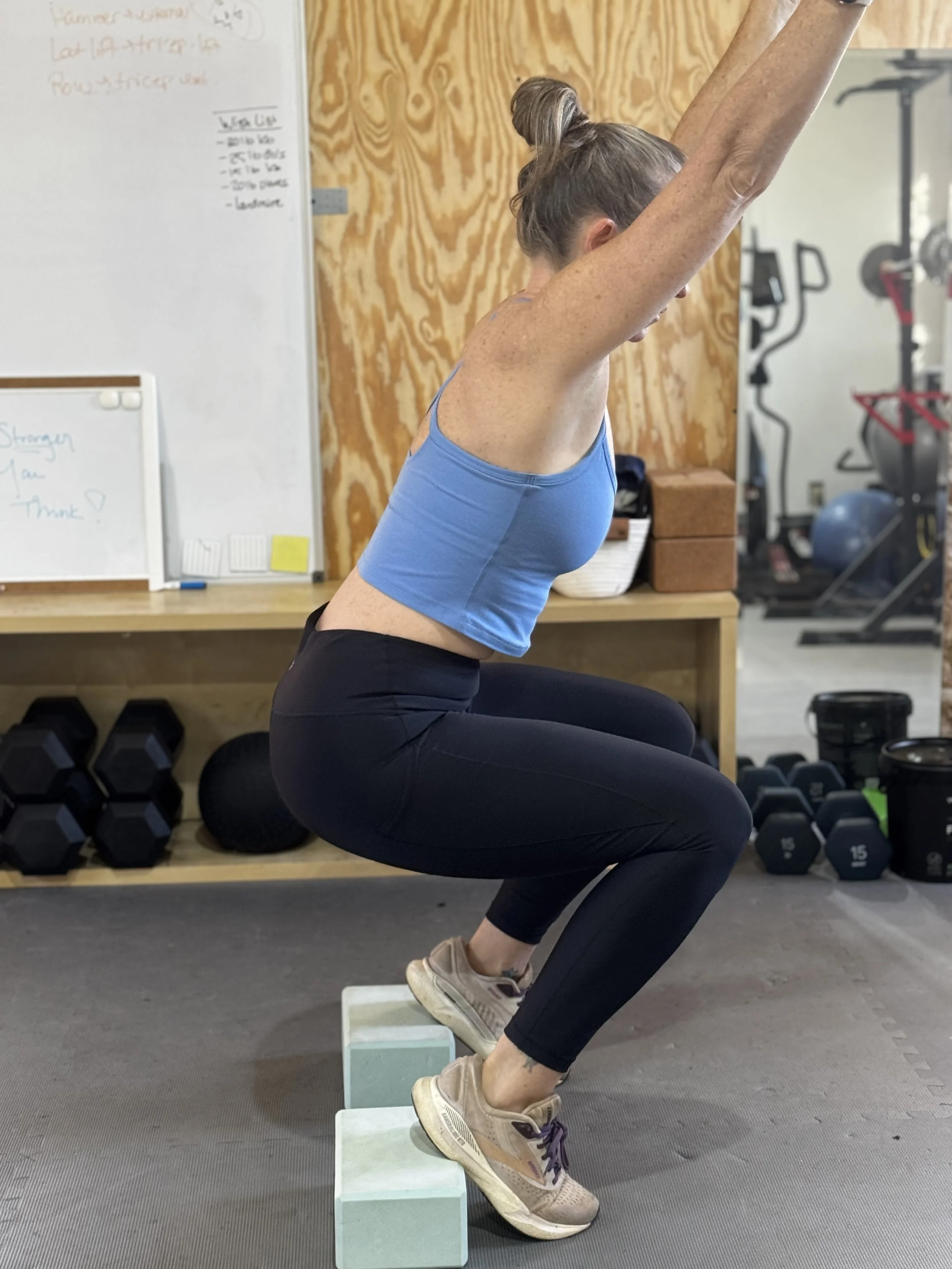
Heels Lifted?
Totally! Especially if you have long legs and want to encourage that deeper sit. Elevated heels also encourages a more upright posture.
This is a great option to start varying your air squat exercise without adding load just yet.
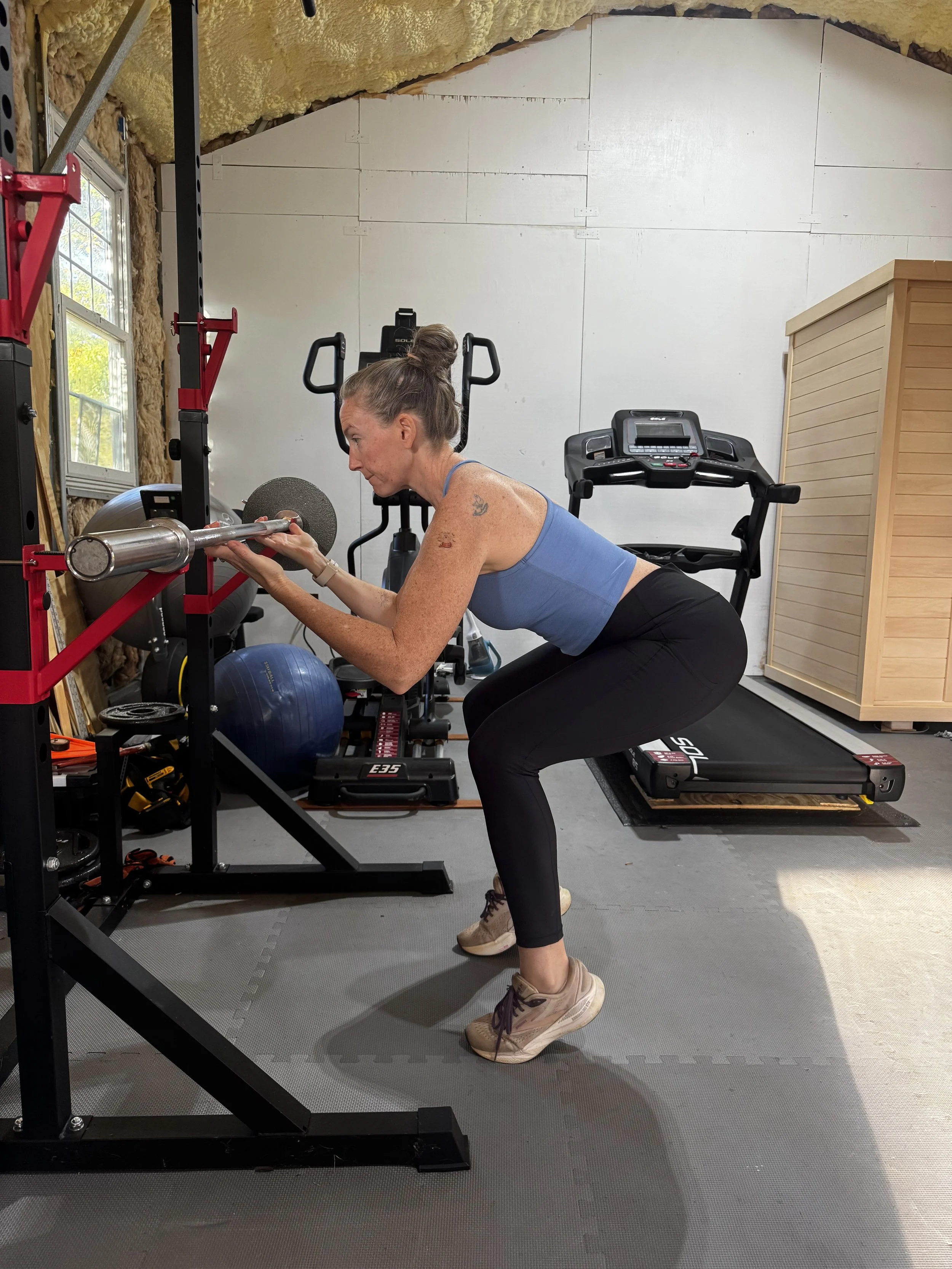
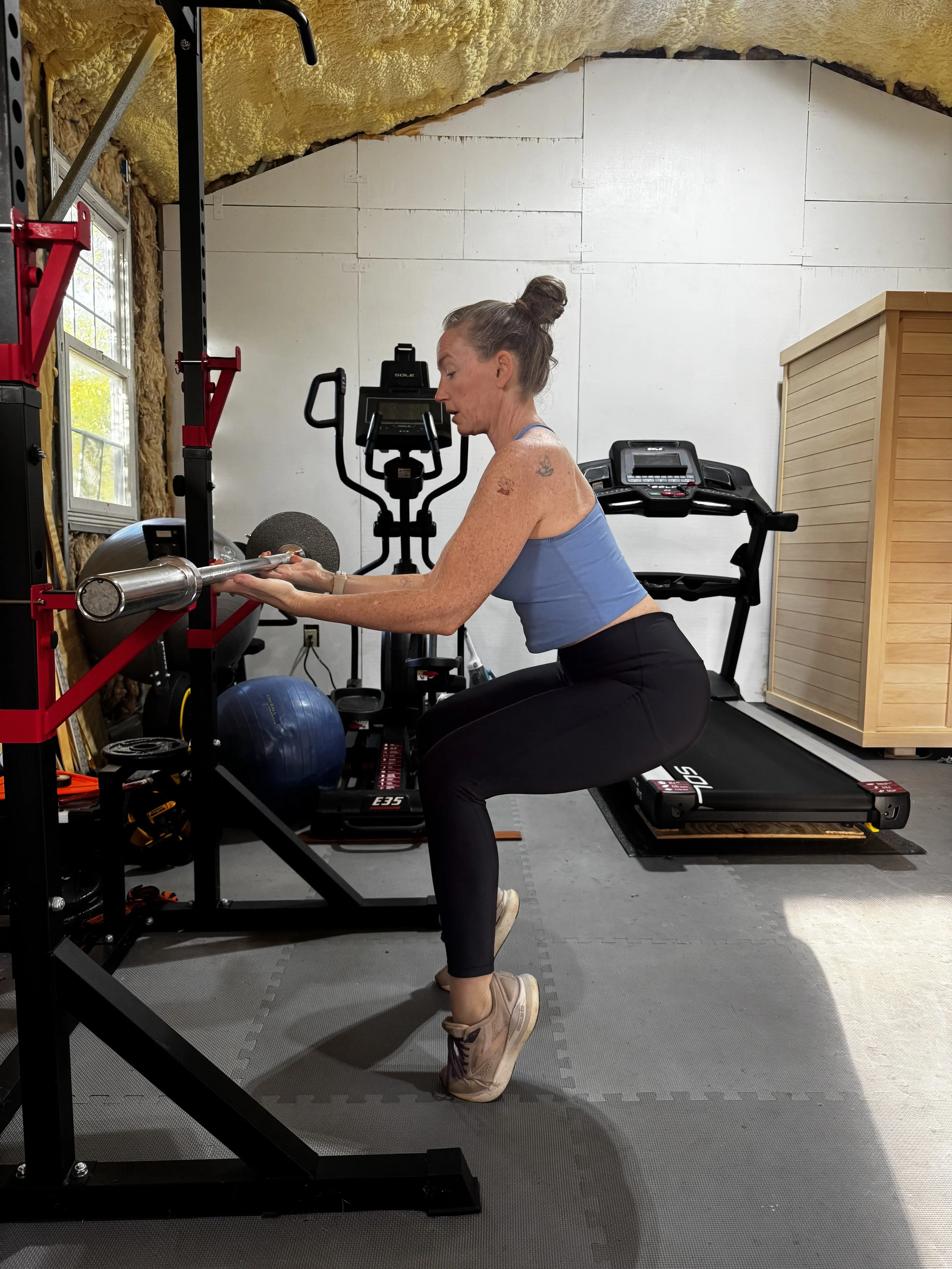
For you barre babes out there, we often do a squat where you hold the bar underhand and can do a couple of things:
1. you can hinge and work more of the posterior chain (glutes, hamstrings, and calves) or
2. lean back into a more upright position (aka the ‘upright squat’) that engages more anterior chain (quadricep and core) for additional posture work.
Getting Technical
The squat is a compound movement, meaning multiple joints are engaged in the movement (hip, knee, and ankle). Primary muscles of a squat are the quadriceps and the gluteus maximus. If you choose to lift the heels, then those quads are going to feel a more intense sensation. Cues to track when you squat: feet are hip width apart or slightly wider, toes forward, knees over middle toes, core bracing (like you’re stepping into cold water), arms can be raised and slightly forward to help you not arch your back, pull ribs in (avoiding rib flare).
The actions of lowering (eccentric contraction) and rising (concentric contraction) in a squat changes the role of the hamstring, specifically. When lowering, the hamstring acts as a stabilizer; when rising, the hamstrings are recruited as a supporting group of muscles. The quadriceps and group of gluteal muscles remain unchanged in their roles on both actions as primary movers. When you practice the squat, can you feel the difference in muscle engagement? Knowing what muscles should be recruited during the squat actions is helpful to prevent injury and stay present with the sensations in the body.
Squat Progression
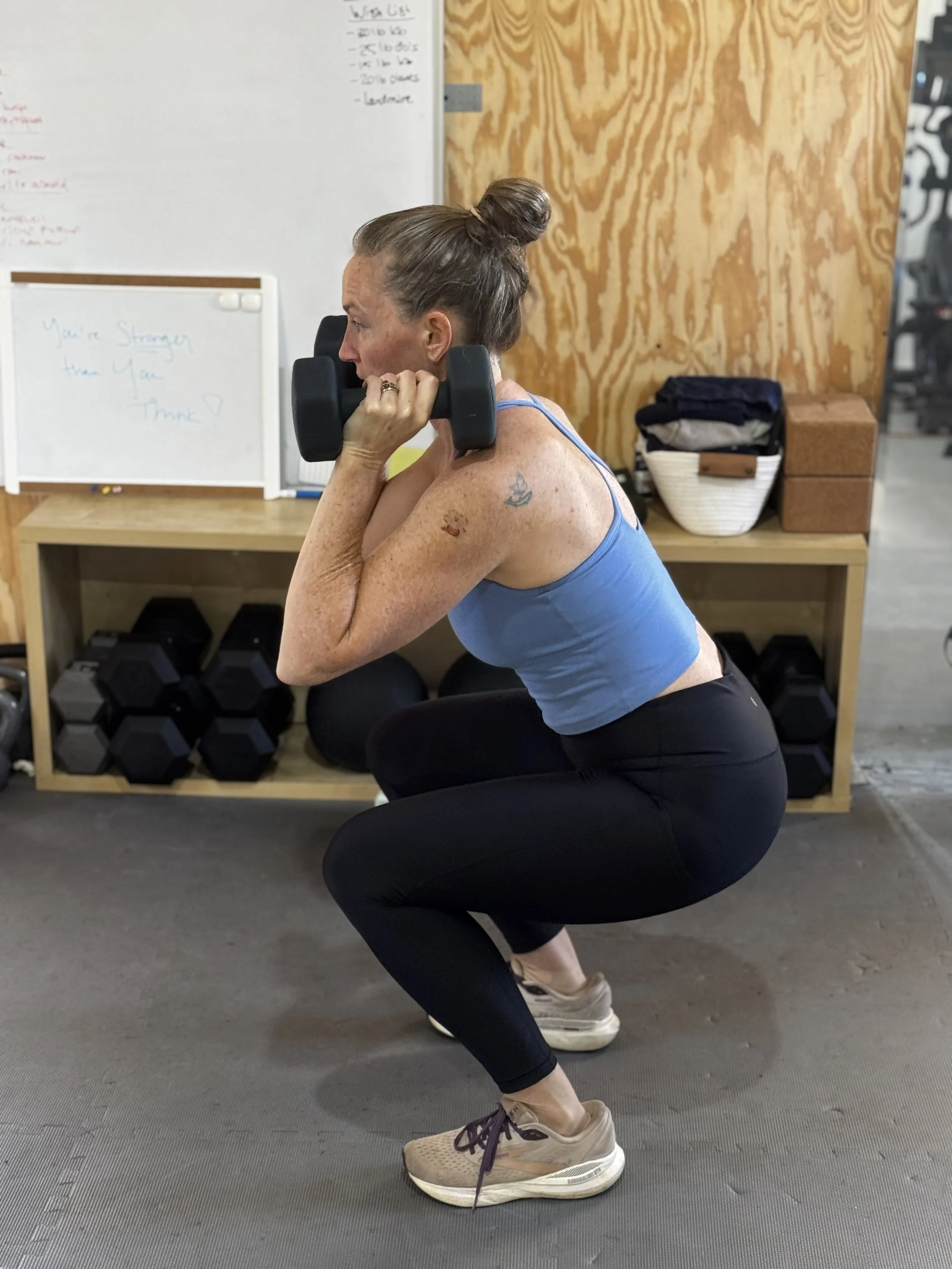
Starting with air squats, meaning body weight only, feet hip width apart, toes forward, arms can be raised to engage the core stabilizers. Work towards 3 sets of 10 reps. One progression from an air squat is to add load. Options are to hold a single dumbbell, kettlebell, or plate at the chest or you can rack a set of dumbbells on the shoulders, keeping elbows in (shown below).
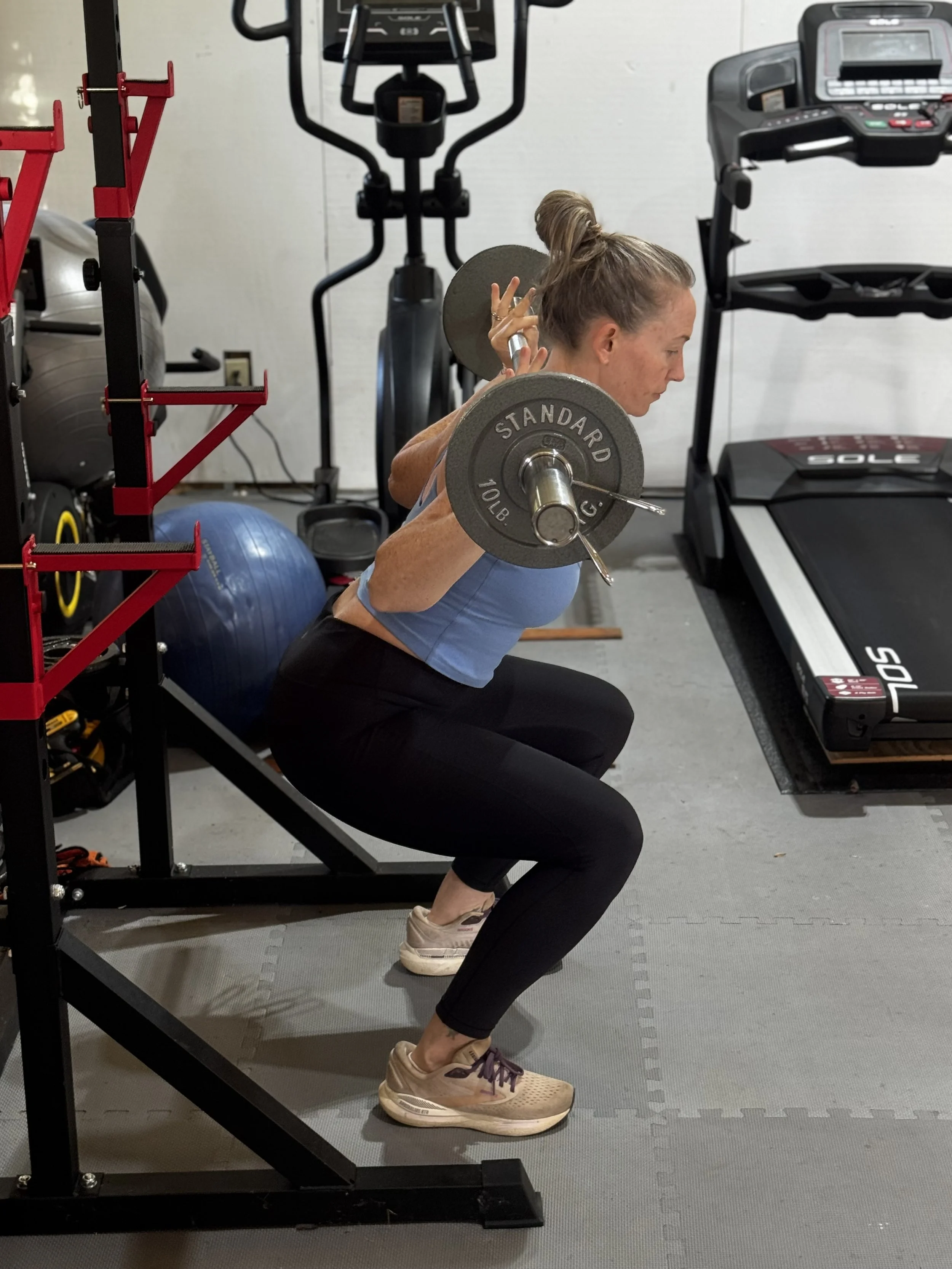
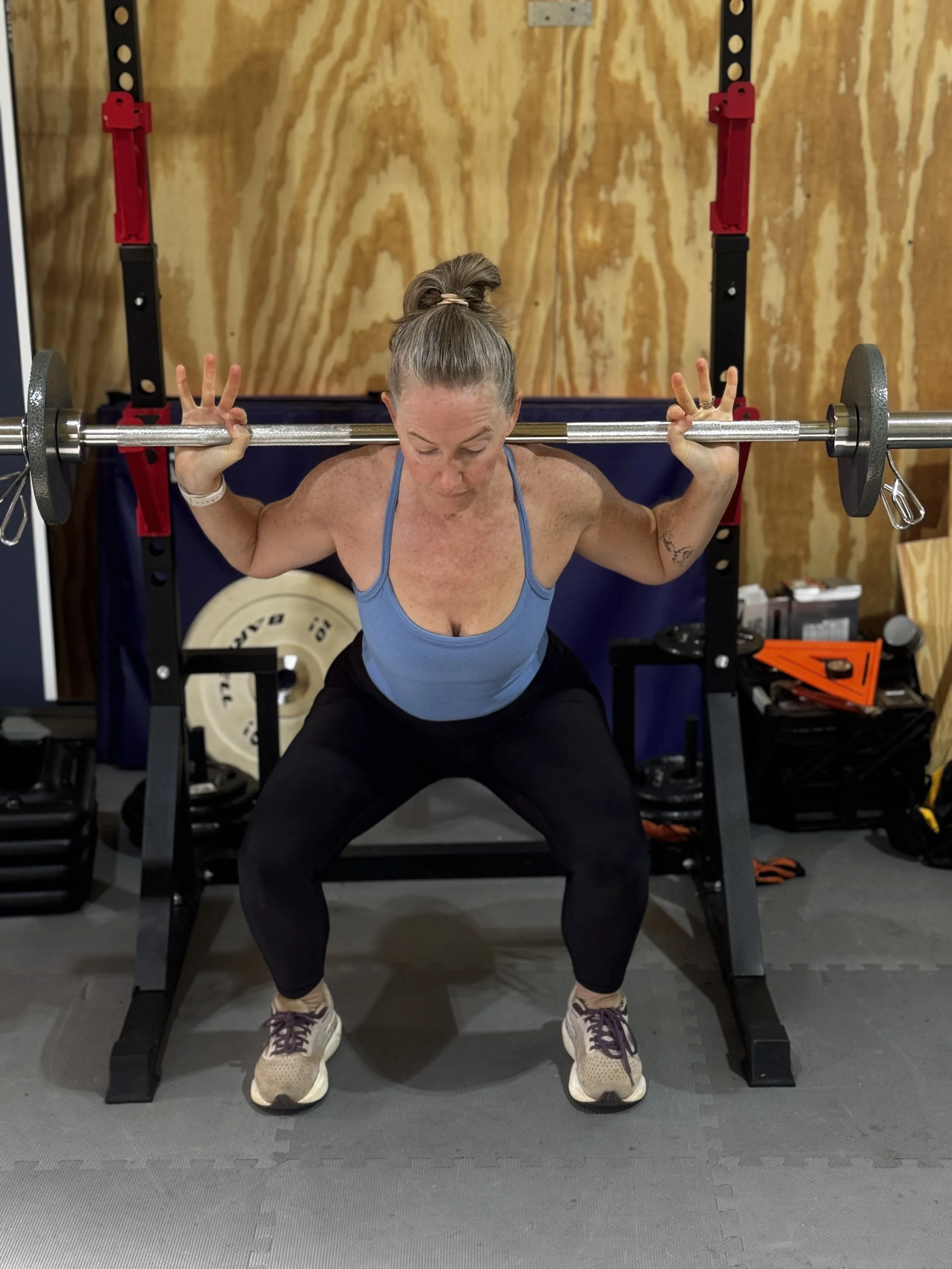
Eventually, over time of adding load with dumbbells, you can try the barbell. This is recommended with the guidance of an certified trainer to give you the safest start. The barbell is 45lb to start.
Squat Varieties and Therapies
Squats are essential to program into a workout every week. When the squat becomes boring, know that there are 101 ways to make the squat interesting and challenging. When the squat is modified, different muscles can be targeted. While we always want to keep the knees over toes, we can use different types of equipment to engage different muscles.
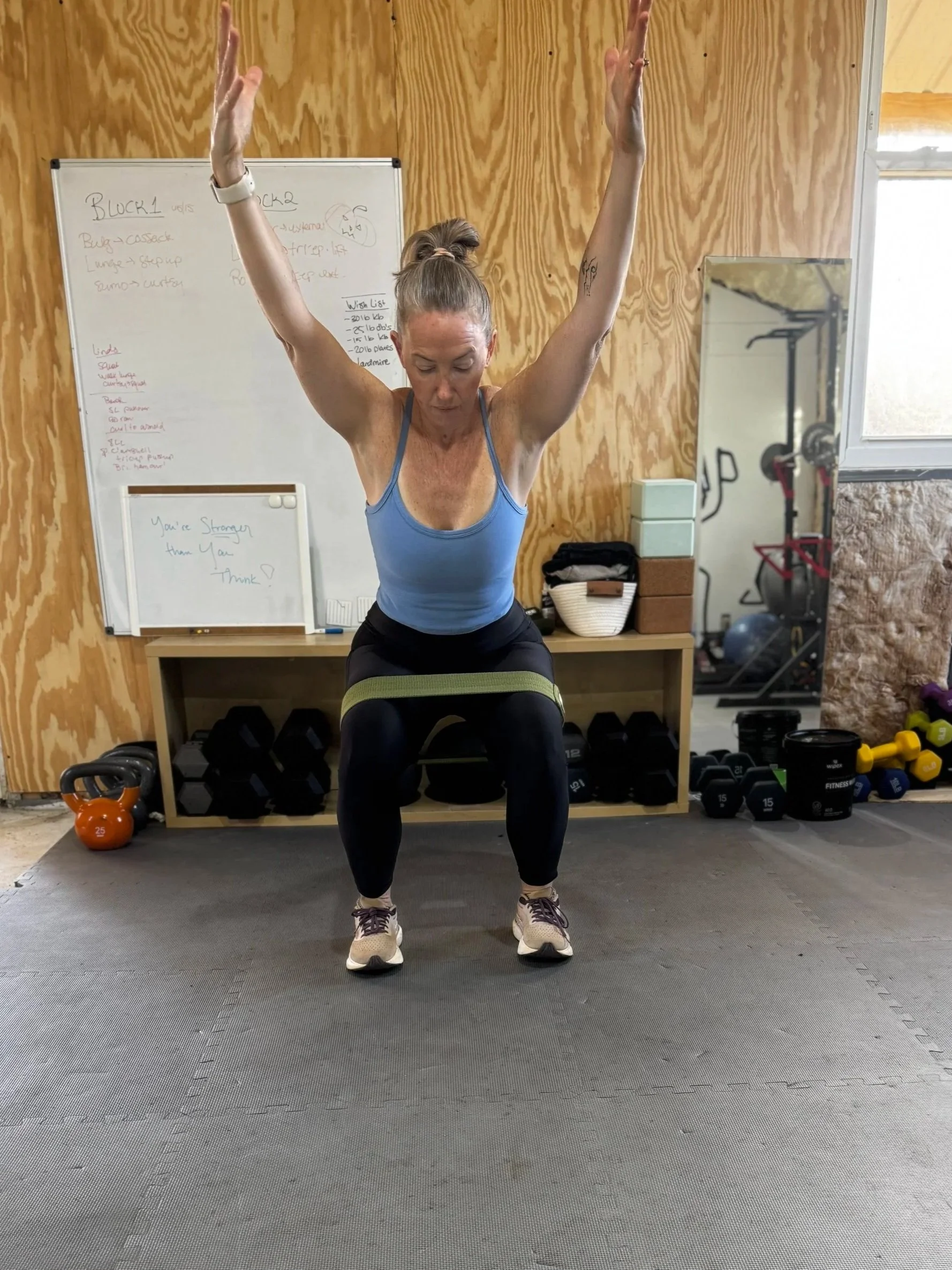
When you have knee valgus (inward turn of the knee), use a band above the knees to encourage the knees over middle toes. This will require the gluteus medius and tensor fasciae to be more engaged. On the opposite end, if you tend to externally rotate your hips or toes, or your adductors are weak, a ball (or block) can be placed between the knees to engage the full suite of adductors as primary movers. The ball also introduces the pectineus (a groin muscle) as a supporting muscle which is important for athletic movements that require quick changes of direction. Both the band and the ball can be used therapeutically and as a way to add variety to your squat programming.
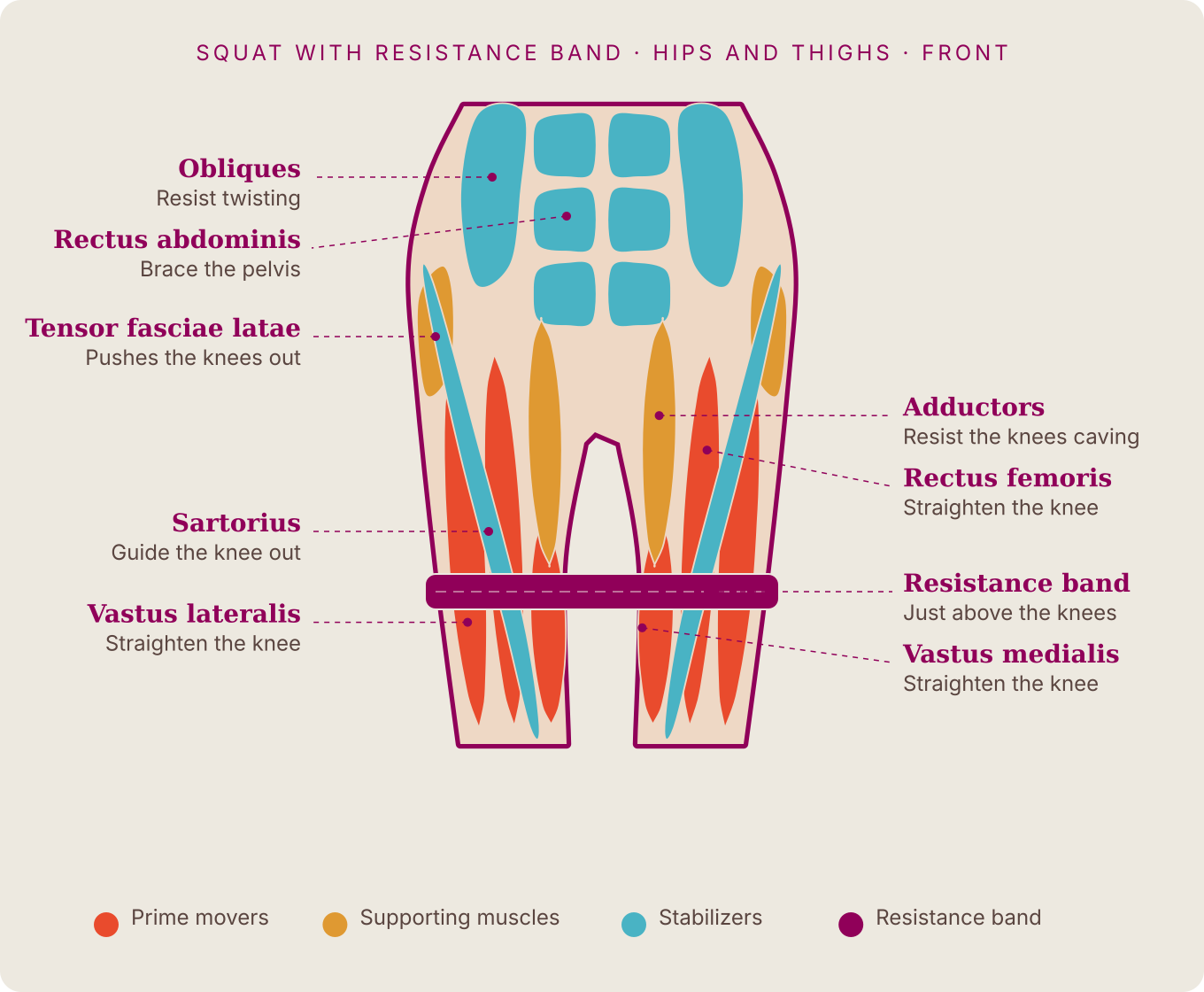
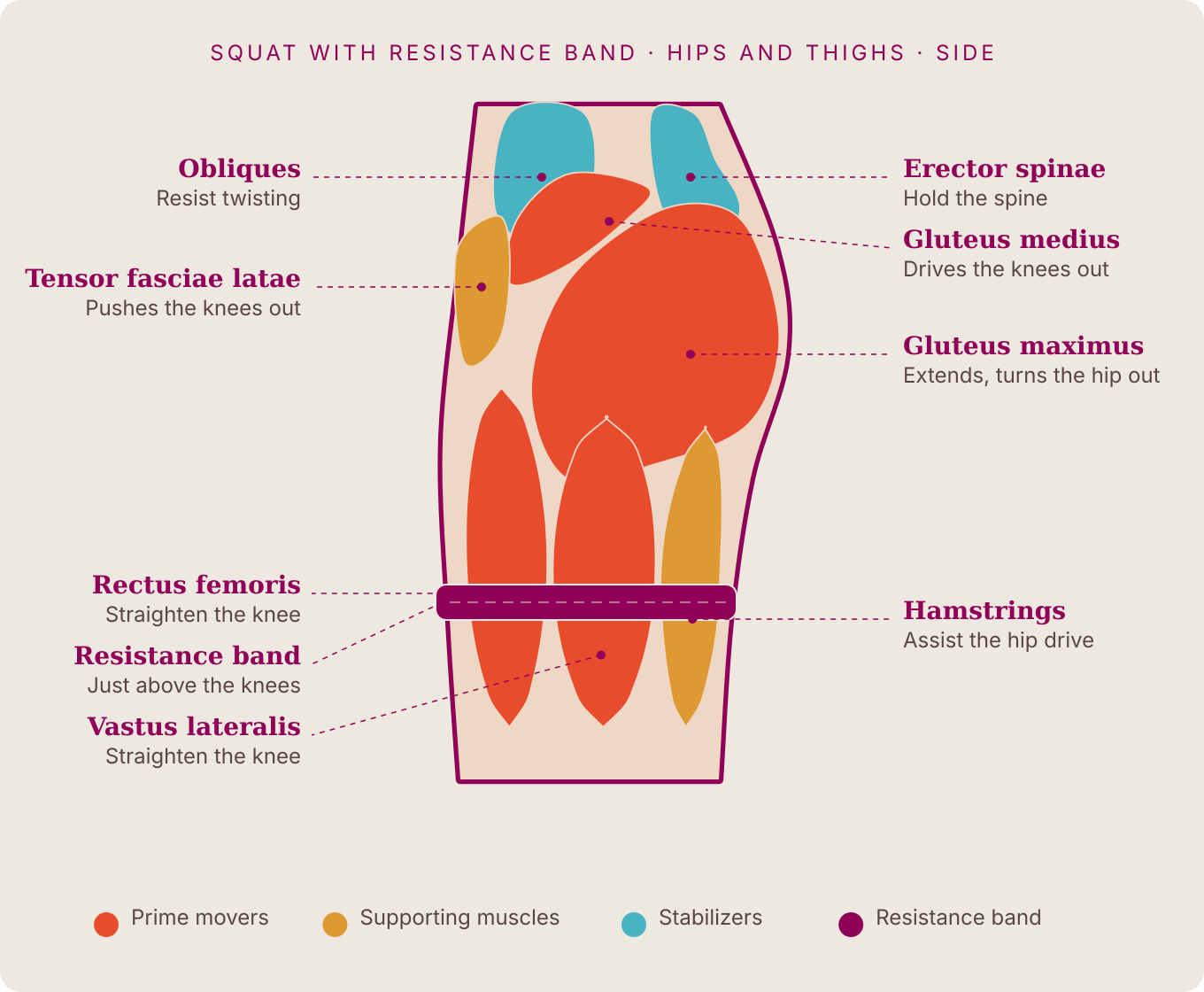
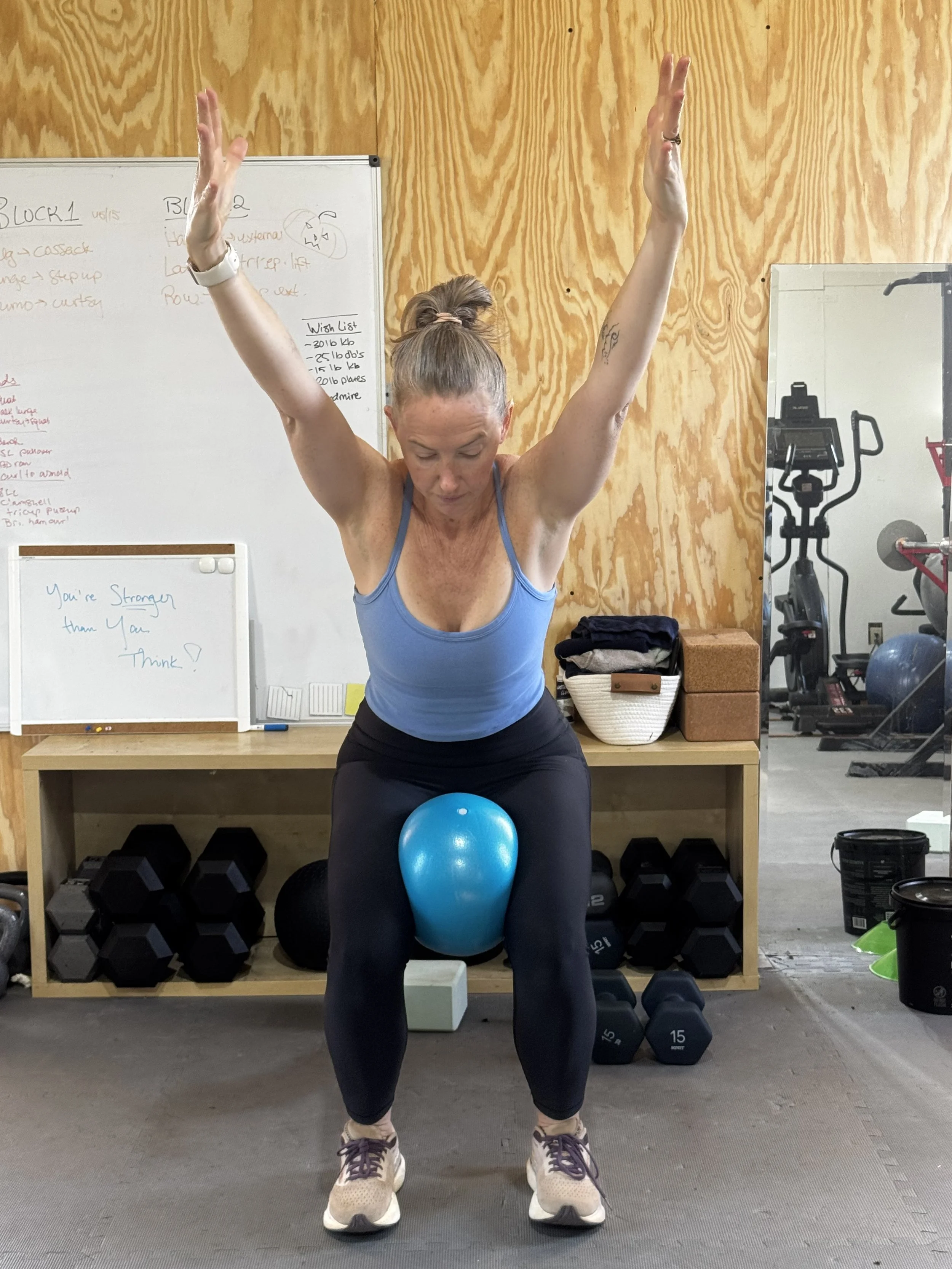
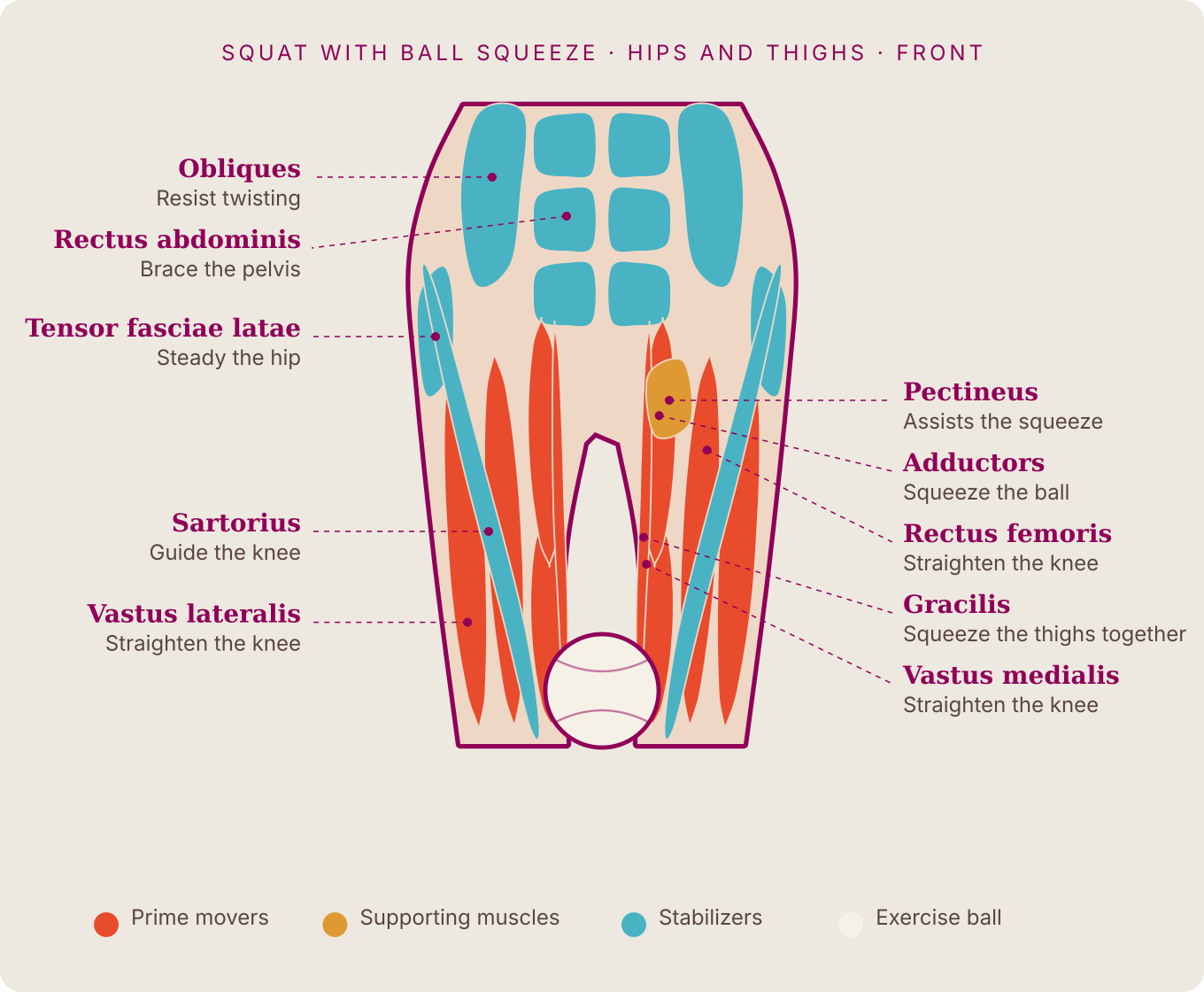
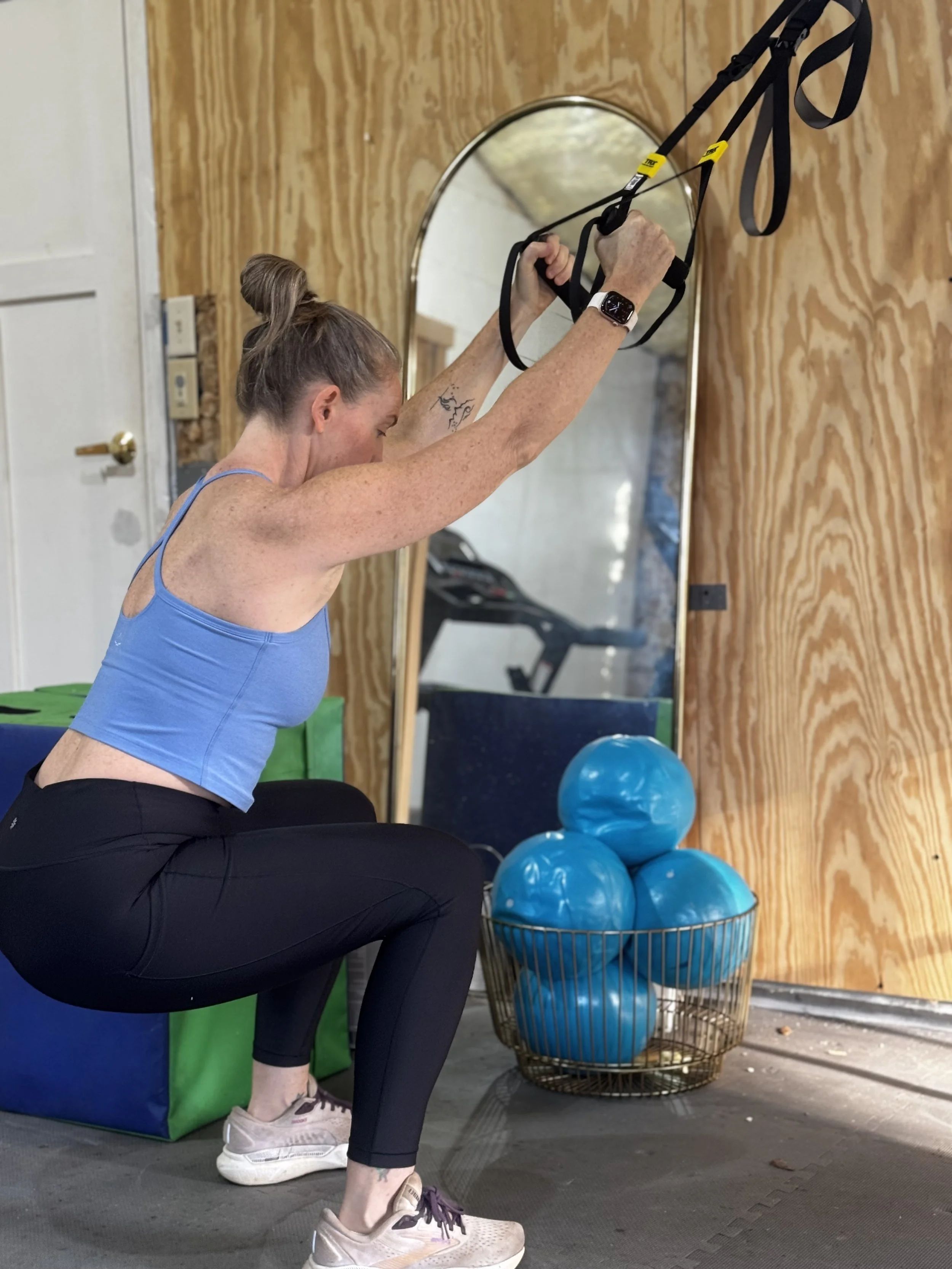
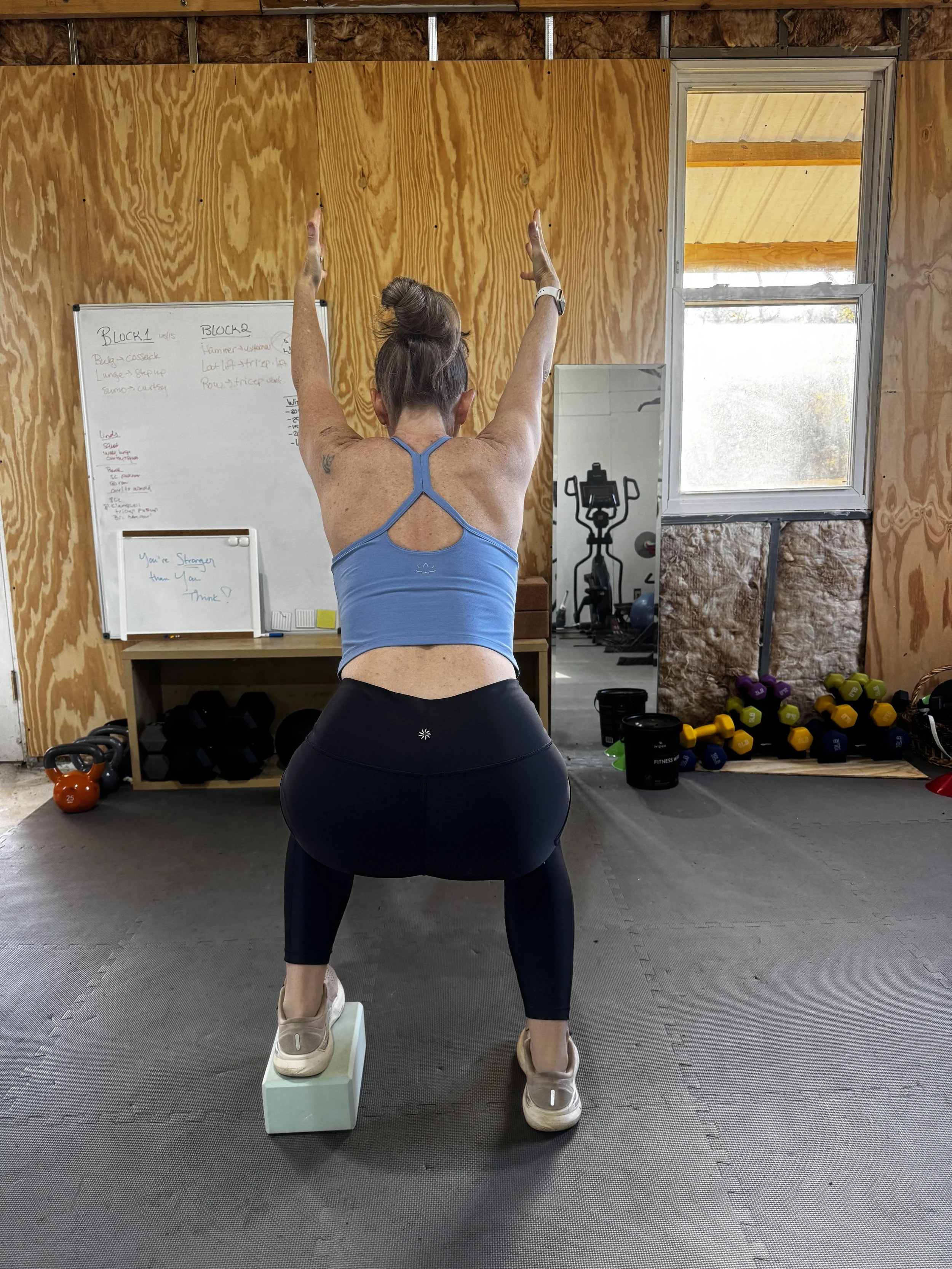
Other equipment and varieties include using the TRX, doing an offset squat with a block (both shown below), adding rotation, and tapping the bum on a bench as feedback for depth. This is also an exercise that you can do unilaterally as a single leg exercise. But, we’ll save that for another day - balance work is my favorite work!
The point here is that the squat is probably the most important exercise you can do and the one you need to do the most. When you are doing an exercise over and over, your body will become used to the motion, so you’ll need to start challenging it in different ways. When you change the ‘purpose’ of the movement by targeting different muscle groups, you can keep the body guessing and thus keep the body strengthening and progressing.
In the End
Progress in a squat can be measured in so many ways - depth, load, reps, length of a hold, to name a few. I challenge you to try the provided options to feel the difference in your own body. Know where you are starting and work from there. When you’re done with exercise, as always, end with some stretching of the muscles you engaged. Foam rolling your quads and glutes at a minimum will help lessen the soreness post-workout. That said, I encourage you to embrace the sore. Know that this is simply your muscles sharing gratitude for the attention you’ve given. And know that the more attention you give, the less they need to tell you about it!
Sthira sukham asanam
-Patanjali’s Yoga Sutras (Sutra 2.46)
The balance of effort and ease. Know that the squat is one of those movements (and poses) that will require effort but encourages ease. When you use the breath and mindful movement with body awareness, you’ll find a deeper connection in this pose.
Disclaimer: It is recommended that you consult with your physician to be cleared for exercise. My recommendations are from my experience as a certified personal trainer, fitness instructor, yoga instructor, and fitness practitioner. Your body is different from mine and my client’s and should therefore be considered as a unique experience when entering exercise with a professional guide. If you want to work with me to get specific programming and cueing, contact me below to get started!
